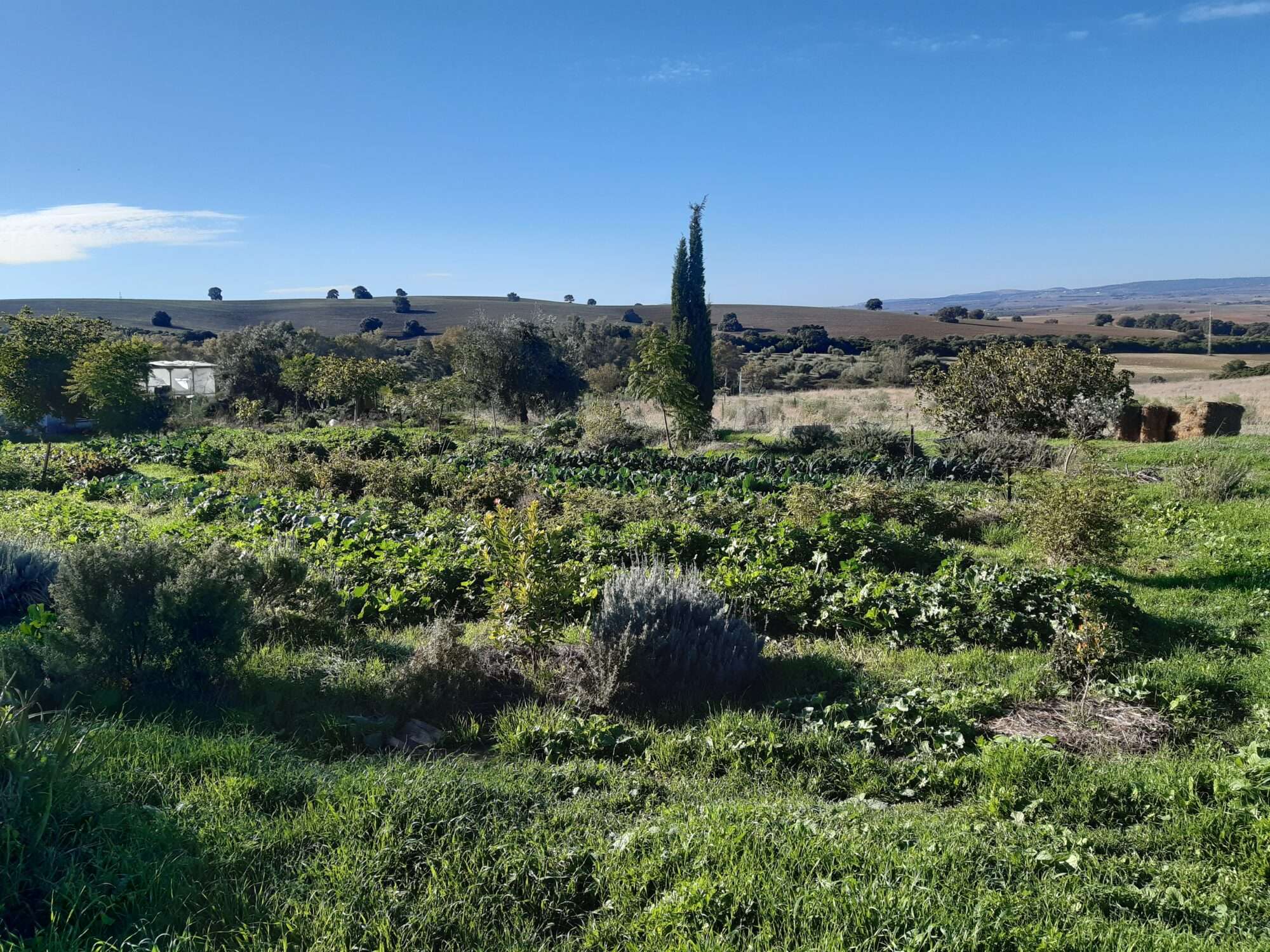
At Danyadara, the main technique we use for regeneration and crop production is Syntropic Agroforestry. In simple terms, this approach mimics the natural dynamics of a forest: cultivating diverse species together, while strategically pruning support plants to provide fertility and resilience for our crops. Furthermore we can regenerate land in a much more efficient way by utilising such technique.
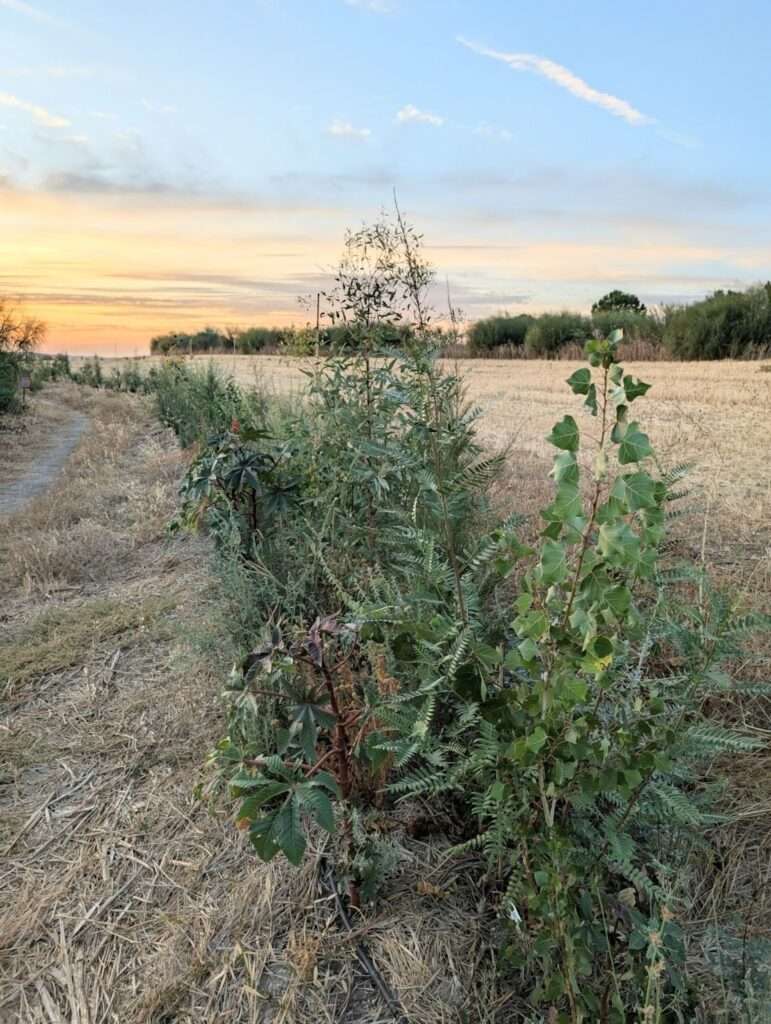
(Image: One syntropic line)
We mostly work with drought-tolerant fruit trees such as olives, almonds, carobs, figs, and pomegranates. Our aim is to integrate these species into syntropic systems so that they not only thrive and remain vigorous, but also contribute to the regeneration of the land.
(Image: Crops integrated in a syntropic line; in order Fig, Almond, Apricot, Pomegranate)
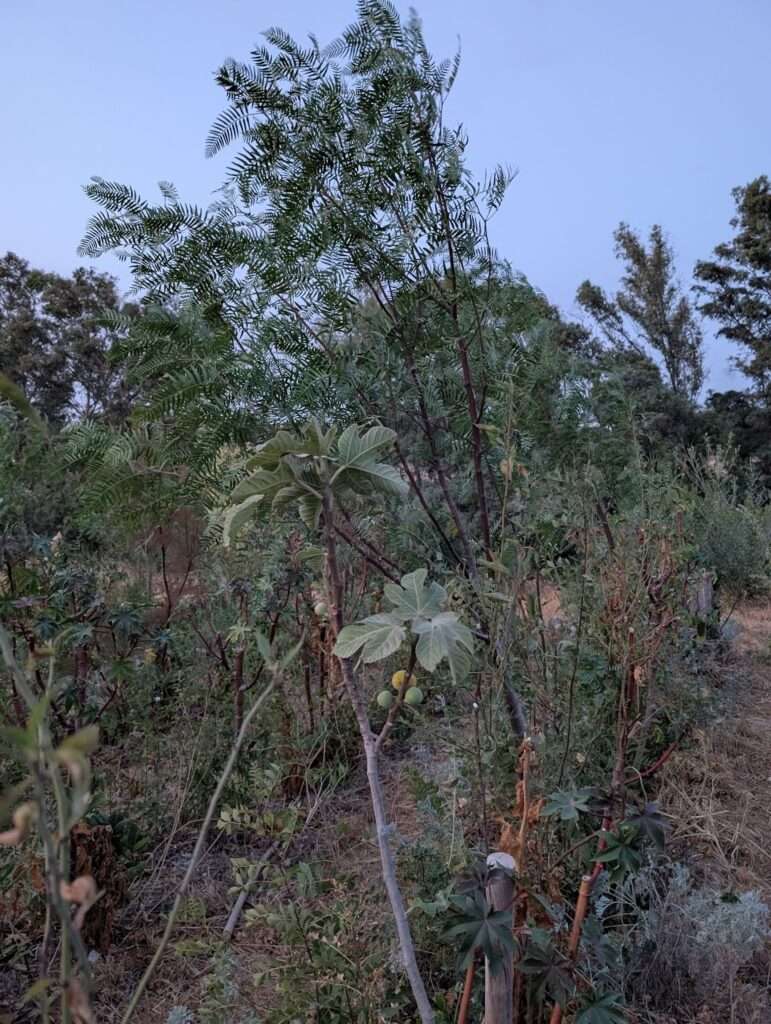
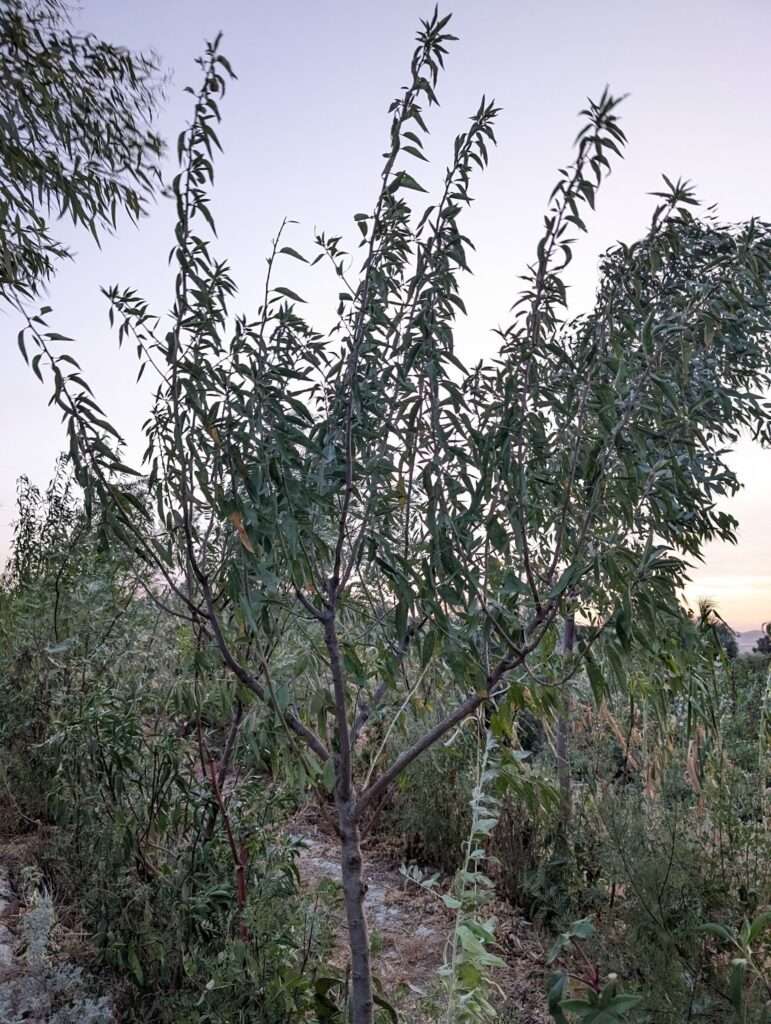
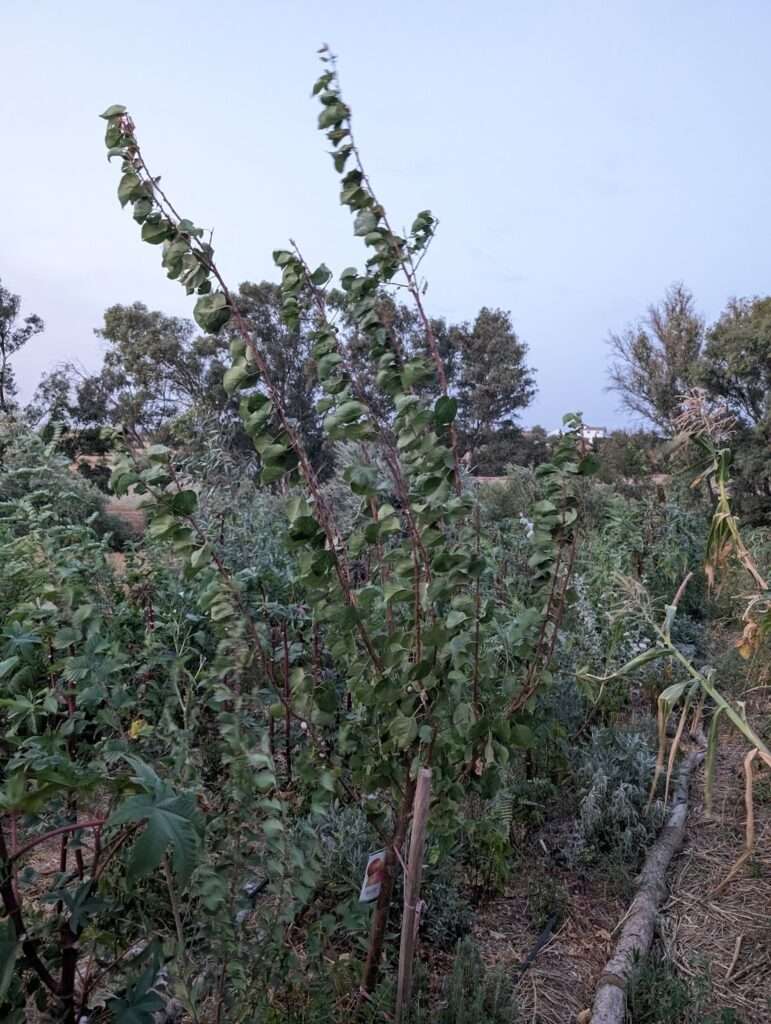
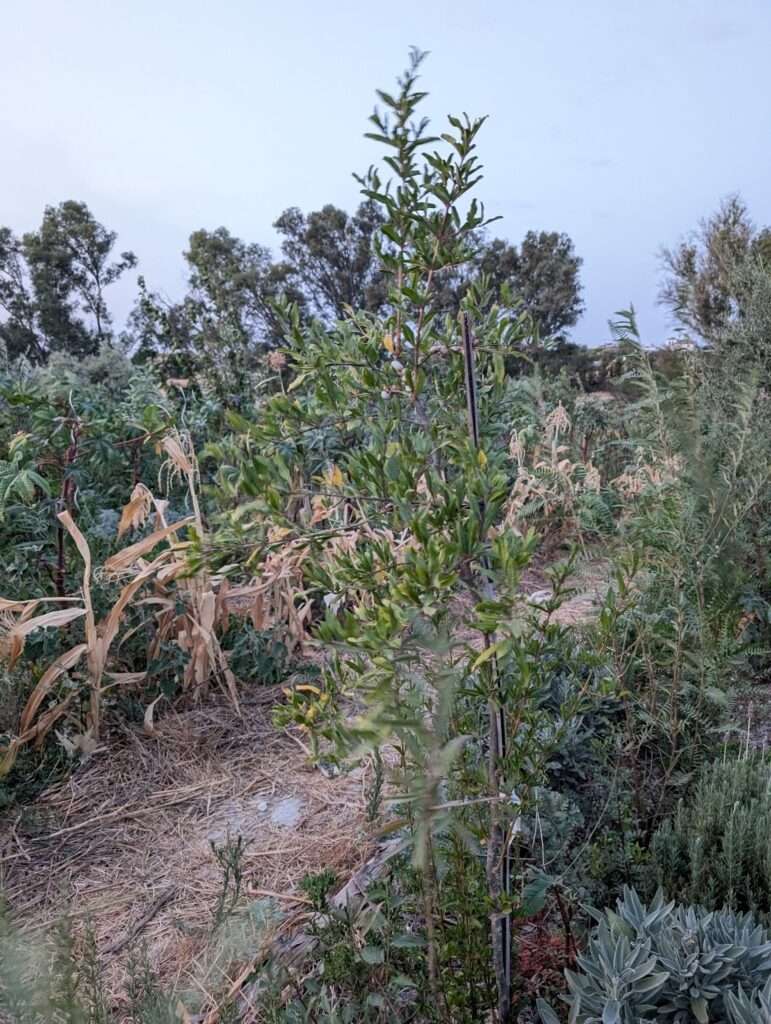
(Image: Crops integrated in a syntropic line; in order Fig, Almond, Apricot, Pomegranate)
A CONCRETE EXAMPLE
Here’s how it looks in practice. In January, we planted a line where the focus is on pistachios and grapes.
Emergent layer : We interplanted fast-growing trees such as eucalyptus and casuarina. These will quickly emerge above the pistachio canopy, sheltering them from the intense summer sun and later providing biomass through pruning.
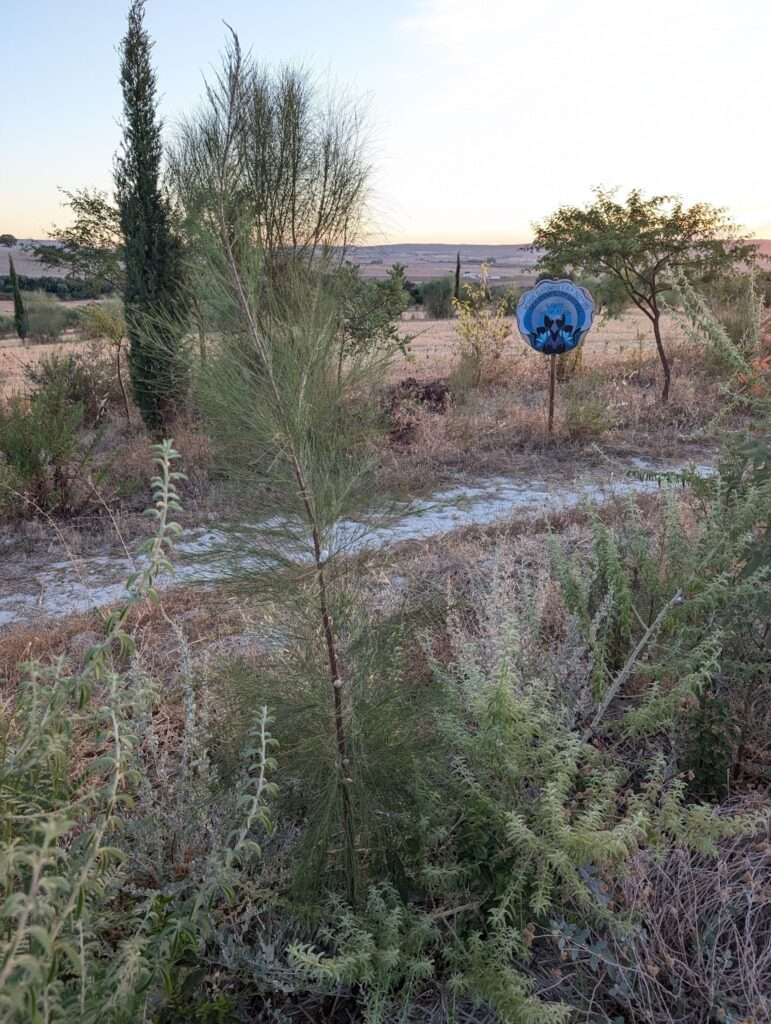
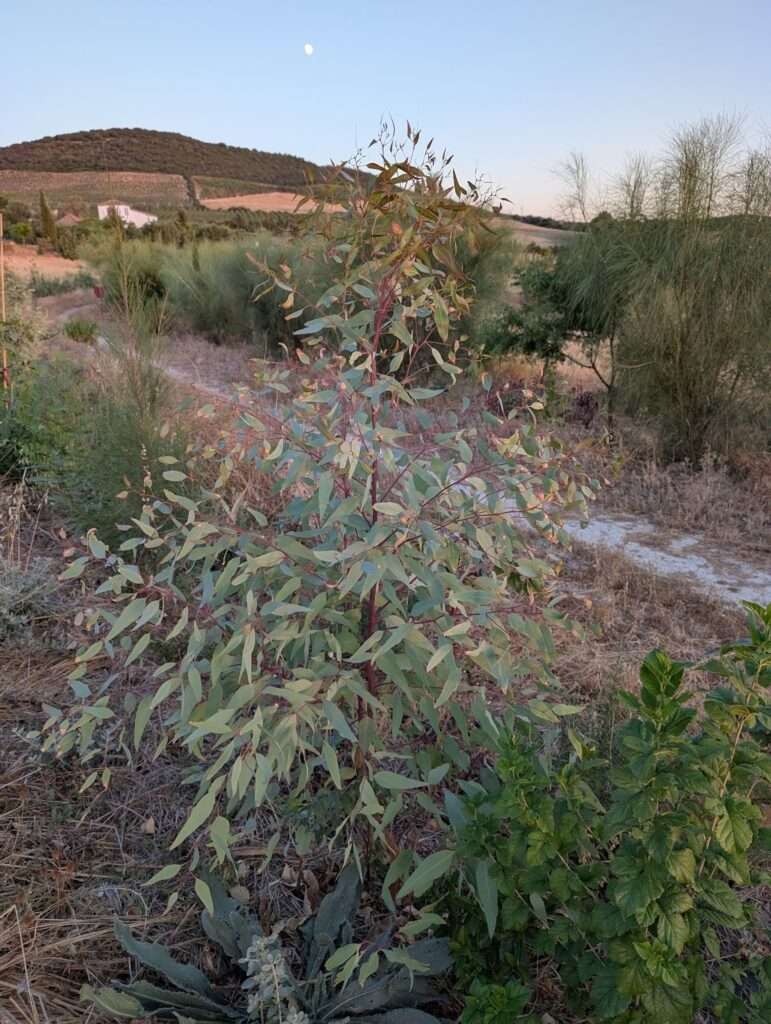
(Image: Casuarina & Eucalyptus)
Pioneering species : Alongside, we planted fast-growing shrubs such as tagasaste, myoporum, tree medick, artemisia, and rosemary. These species spread out rapidly, protect the soil from drying, and supply early biomass for mulching and nutrient cycling.
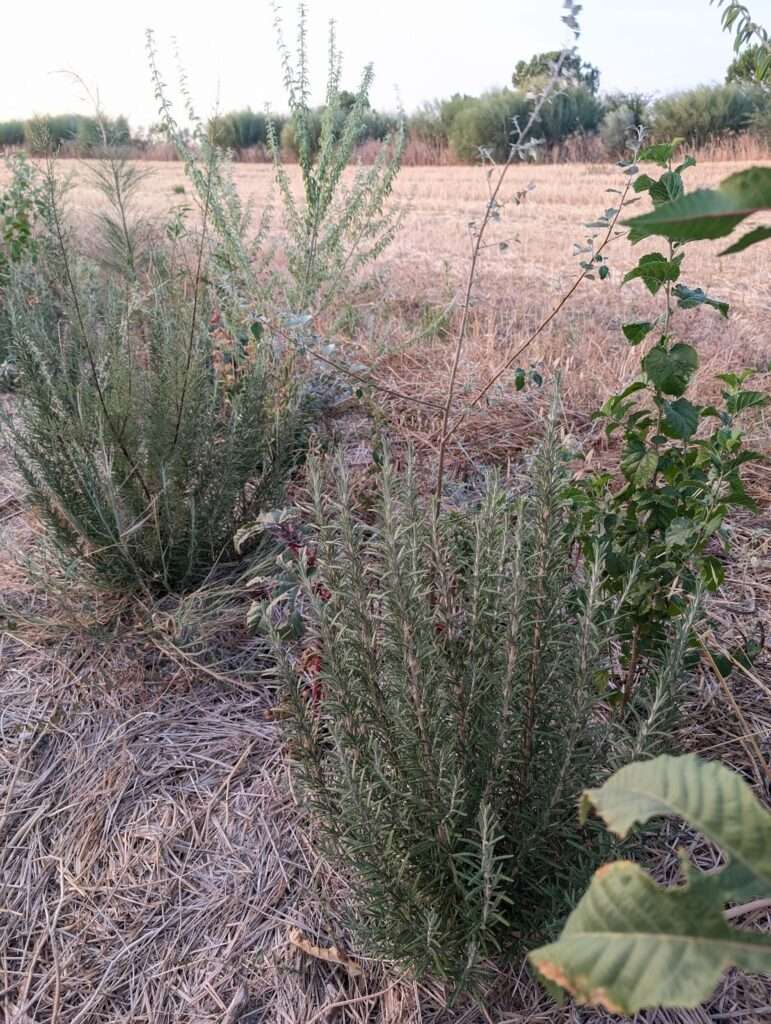
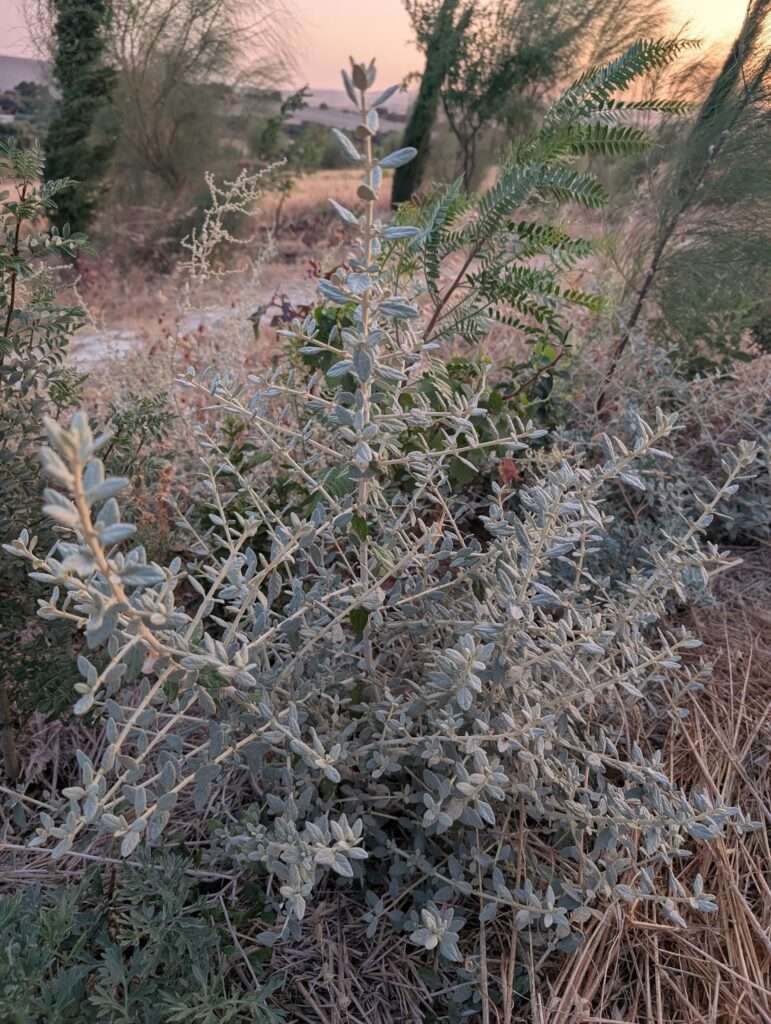
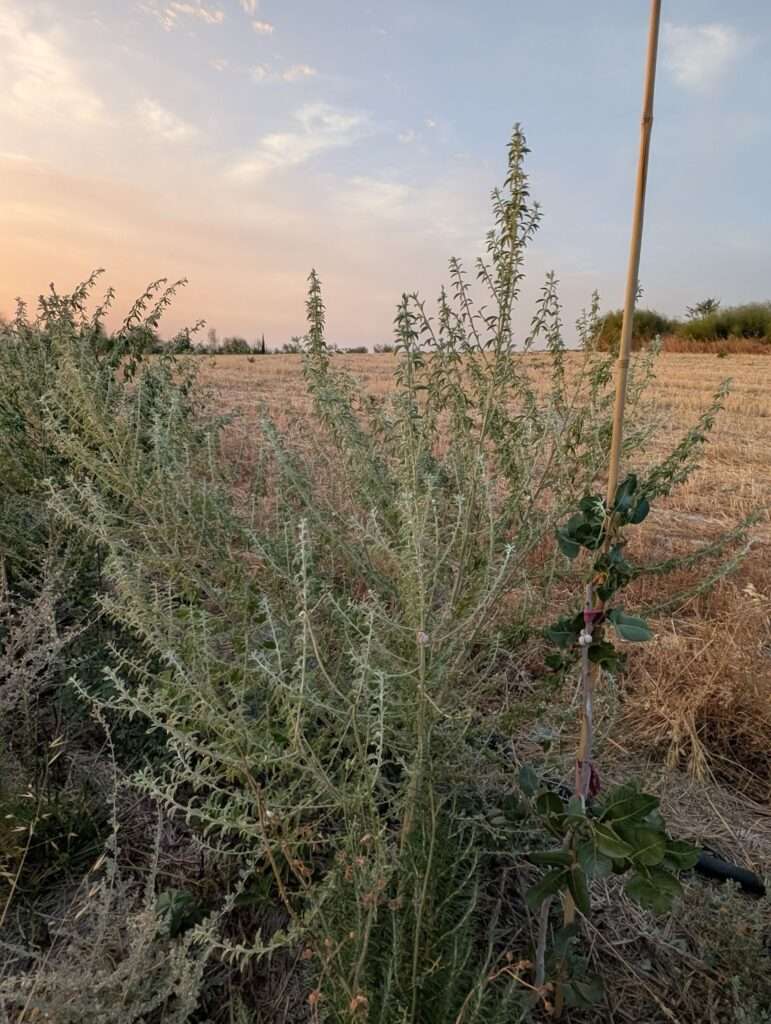
(Image: Shrub species nursing trees : Rosemary, Artemisia, Germander, Tagasaste)
Vines : Between pistachios, we planted wine grapes. They climb a Peruvian pepper tree, much like they would in the wild. We are getting inspired by how the Romans grew wine grapes on poplars and different tree species.
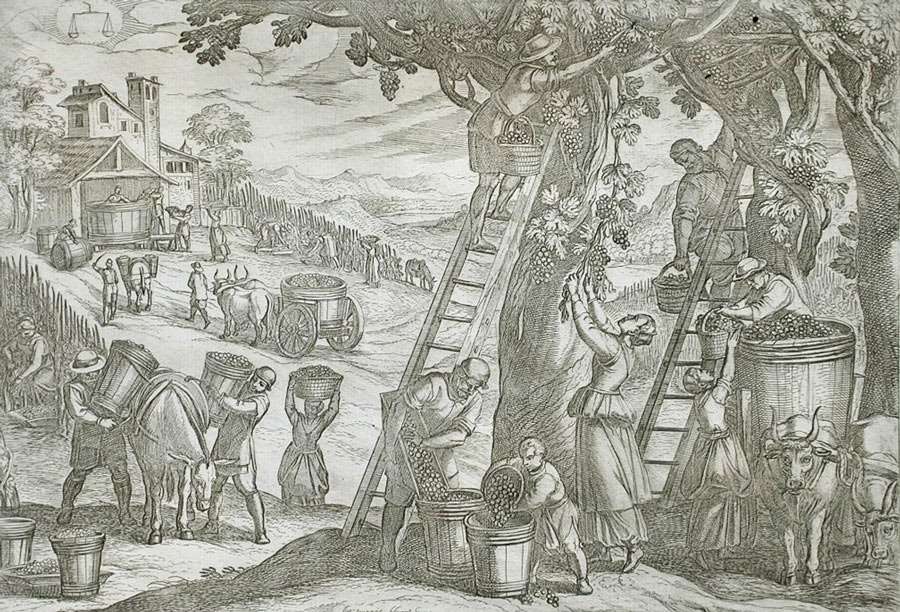
(Image: WIne grapes grown on poplar by Romans)
Grapes offer early yields—in a couple of years only—while pistachios take longer to produce. Each year, the pepper tree is pruned to allow enough light for fruiting, while simultaneously serving as a living trellis.
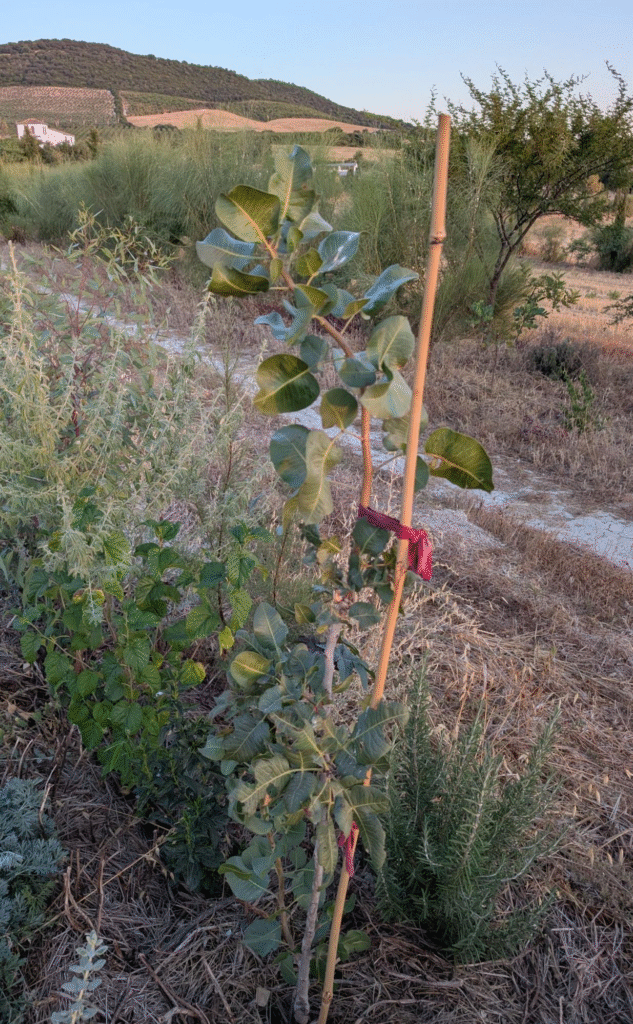
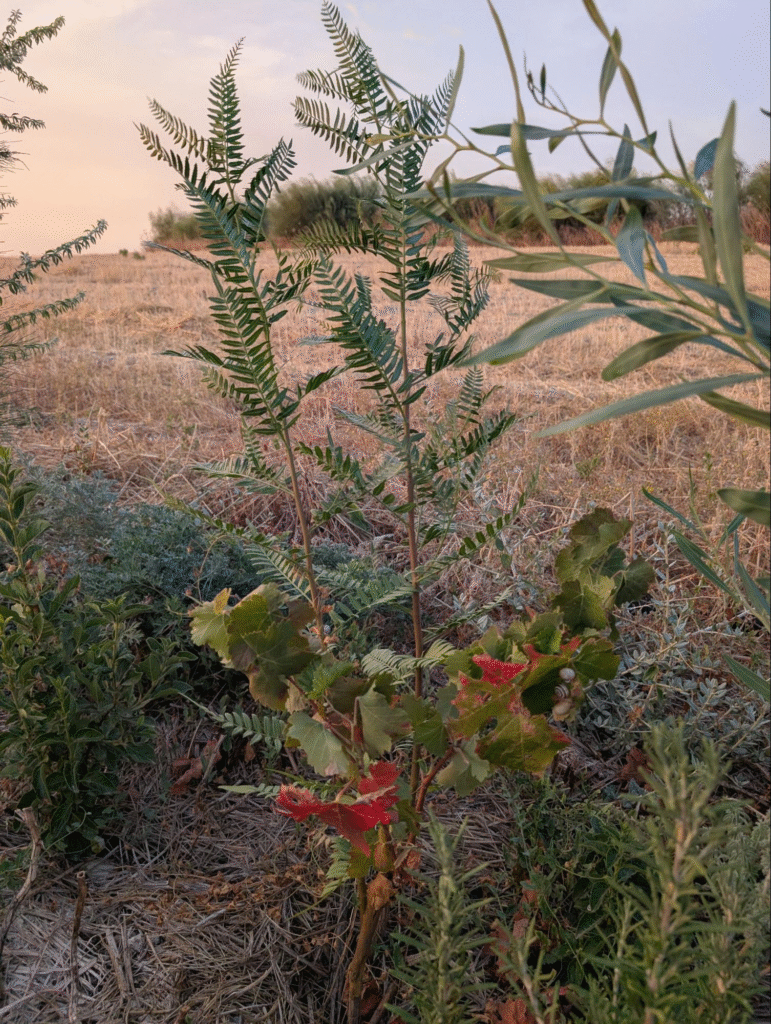
(Image: Grapes climbing pepper tree/ Pistachio)
Why Syntropic Agroforestry
All in all, syntropic agroforestry helps us produce vigorous trees that build topsoil and reduce the need for external inputs. It’s an approach that fosters resilience in contrast to the soil-depleting, chemical-dependent food systems that dominate today.
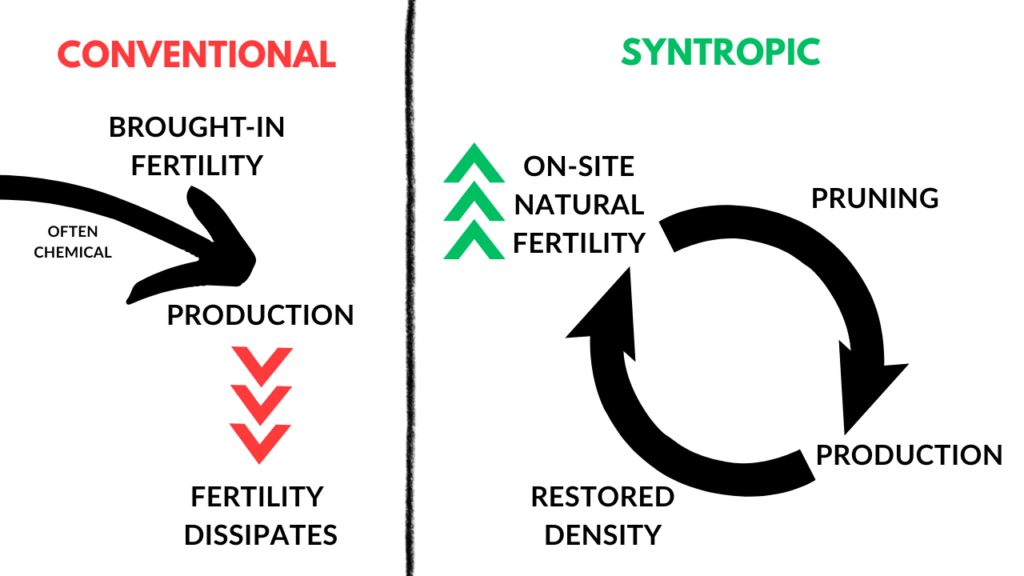
(Image: Conventional food production VS Syntropic food production)
In arid areas like ours, the difference is striking. Conventional farming often leaves land barren and prone to desertification. In contrast, syntropic systems can transform even compacted, poor soils into rich, deep topsoil within a decade or two. This picture below here is of a plantation implemented in January 2023, in our poorest, rockiest, most compacted soil. It used to look exactly like it did on the left. It really shows plants planted in high density together can regenerate a site in a much shorter amount of time rather than if it was left alone.
